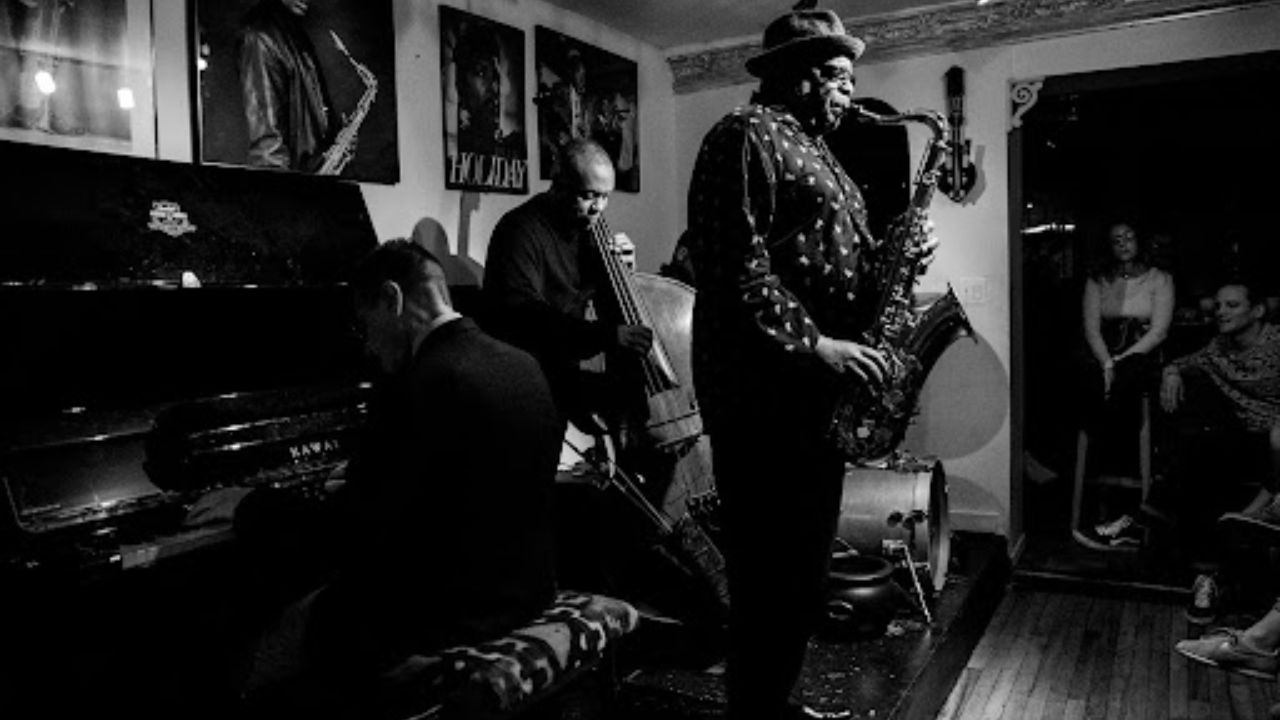
Billie Holiday was discovered on West 133rd Street in Harlem, the same address where Bill’s Place Harlem hosts live jazz today. That shared geography matters. It connects modern listeners to the exact neighborhood energy that shaped one of jazz’s most important voices.
Bill’s Place Harlem is not a museum. It is a working jazz space inside a real Harlem brownstone. And it offers one of the closest ways to hear jazz the way it was first shaped in this neighborhood.
Why Bill’s Place Harlem is Historical
Bill’s Place Harlem is one of the last places in New York where jazz still sounds like it belongs to the room it is played in.
There is no stage lighting. No bar noise. No crowd rushing in and out. Music happens a few feet away, in a space built for listening.
That alone answers the big question most people have.
Yes, jazz here feels different. And yes, that difference is real.
West 133rd Street and Billie Holiday’s Discovery
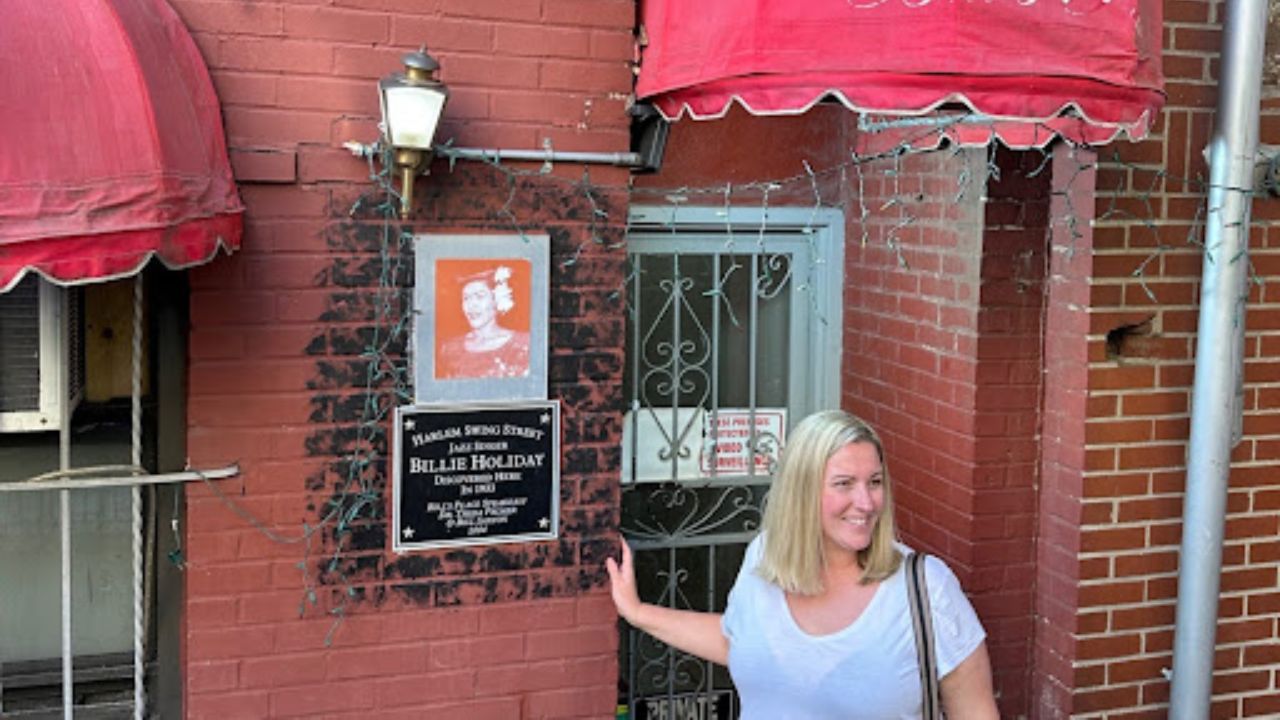
Billie Holiday was discovered as a teenager singing on West 133rd Street in Harlem. Music producer John Hammond heard her there in the early 1930s. That moment helped change the course of jazz history.
The discovery did not happen at Bill’s Place Harlem. It happened earlier, inside Monette Moore’s Supper Club, which once operated in this same building. That distinction matters.
West 133rd Street was part of Harlem’s musical backbone during the Harlem Renaissance. This block sat inside what locals called Swing Street. Brownstones, supper clubs, rent parties, and informal venues lined the area. Music moved easily from room to room. Talent was often found by listening closely, not by promotion.
Bill’s Place Harlem now occupies that same address. It does not claim the discovery. Instead, it preserves the conditions that made discovery possible. Close rooms. Quiet listening. Music played without distance or spectacle.
The connection here is geographic and cultural, not symbolic. Jazz once grew in these rooms because people lived here. Bill’s Place continues that tradition by keeping jazz inside a Harlem residential building, not on a stage built to impress outsiders.
That continuity is the point.
What Bill’s Place Harlem Actually Is
Bill’s Place Harlem is a brownstone jazz venue inside what was once a private Harlem home. From the outside, it looks like any other townhouse on the block.
Inside, it feels focused and calm.
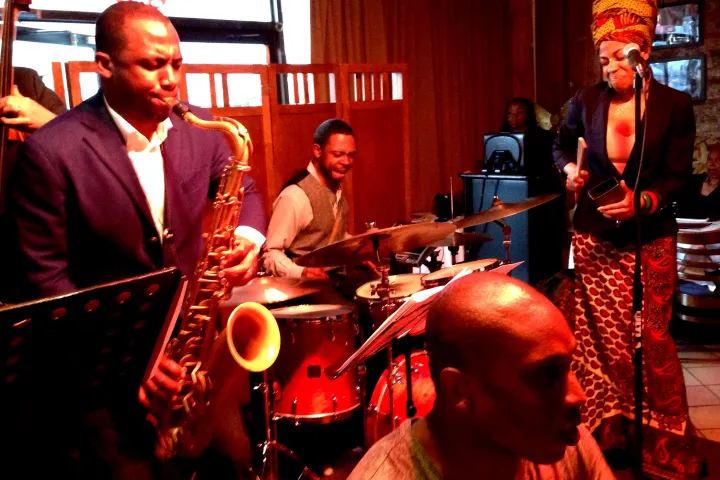
The room is small. Chairs sit close together. Musicians play without amplification most nights. You hear breath, timing, and tone clearly.
This is not background music. It asks for attention.
What the Space Feels Like
- A living room, not a club
- Quiet between songs
- Nothing separating players and listeners
- Sound that fills the room naturally
That setup is not accidental. It reflects how jazz first developed in Harlem homes.
Bill’s Place Harlem History and the Man Behind It
Bill’s Place Harlem exists because of Bill Saxton, a Harlem-born saxophonist and jazz historian with decades of experience.
Saxton has performed professionally for more than fifty years. He is a working musician, not a promoter or club owner who came to jazz later. He studied music at the New England Conservatory. That formal training sits alongside deep lived experience in Harlem’s jazz community.
Over the years, Saxton has performed with major figures in jazz. His credits include work connected to the Duke Ellington tradition, as well as performances with artists such as Clark Terry and Frank Foster. These are musicians tied directly to the core of American jazz history. That background shapes how he thinks about sound, space, and respect for the music.
Bill Saxton is also one of the very few Harlem-born Black jazz musicians to open and run a venue in his own neighborhood. That detail matters. Bill’s Place Harlem was not created as a business idea. It was created as an act of preservation.
He opened Bill’s Place inside a brownstone he bought in the mid-2000s. The choice was intentional. Harlem had already lost many of its historic jazz spaces. New venues often felt disconnected from the community. Saxton wanted something different.
By using his own space, he kept jazz where it had always lived in Harlem. Inside real rooms. Among neighbors. Without barriers.
His role during shows is personal and hands-on. He often greets guests at the door himself. Before sets, he shares short stories about Harlem’s past. These are not lectures. They are context. They help listeners understand why the room feels different from a club.
During performances, Saxton leads the Harlem All-Stars, a rotating group of seasoned jazz musicians. The band reflects the neighborhood’s sound. Straight-ahead. Grounded. Focused on listening.
Beyond performances, Saxton’s work extends into education and community history. He has led jazz literacy programs for young people and has been involved with nonprofit efforts connected to Harlem’s jazz scene. The goal stays consistent. Teach jazz as living culture, not distant history.
Everything about Bill’s Place Harlem reflects that mission. The quiet room. The close seating. The lack of amplification. The slow pace.
Musicians feel respected. Audiences feel present. Nothing feels rushed or commercial.
That is why artists return.
That is why listeners remember the room.
And that is why Bill’s Place Harlem continues to matter.
Bill’s Place Harlem and the Building’s Jazz Timeline
The history of Bill’s Place Harlem starts long before Bill Saxton opened his door.
The brownstone sits on West 133rd Street. This block once formed part of what locals called Swing Street. The name refers to 133rd Street between Fifth Avenue and Seventh Avenue. During the 1920s and 1930s, this stretch was packed with music, nightlife, and late-night jam sessions.
Jazz did not arrive here by accident. It grew naturally inside these buildings.
The 1920s: Tillie’s Chicken Shack
In the 1920s, the building that now holds Bill’s Place was home to Tillie’s Chicken Shack. It was a small Harlem nightclub and social space. Music was part of the draw, but so was food and community.
Pianist Fats Waller performed there during this period. He was already known for his stride piano style. The setting suited him. The room was closed. The crowd was local. The energy was informal but serious.
Spaces like Tillie’s helped shape Harlem’s homegrown sound and culinary distinction. Tillie is credited with creating the popular soul food dish, Chicken and Waffles, here. The Early 1930s: Monette’s Supper Club
By the early 1930s, the space became Monette’s Supper Club. It was run by singer Monette Moore. The room remained small, but it drew musicians, producers, and listeners who followed Harlem’s nightlife closely.
In early 1933, a young singer filled in for Monette Moore. She was seventeen years old. Her name was Billie Holiday.
Music producer John Hammond was present that night. He later wrote about hearing her sing on West 133rd Street and recognizing her talent immediately. That encounter led to recording opportunities that launched her career.
This moment is widely associated with this building and this stretch of the block. It did not happen on a large stage or inside a theater. It happened in a Harlem room where people listened closely.
That detail matters. Jazz history here unfolded quietly, inside everyday spaces.
Swing Street and Willie “The Lion” Smith
The story does not end with one singer.
West 133rd Street was home to several major jazz figures. Pianist Willie “The Lion” Smith lived nearby. He was one of the leading stride pianists of the era and a central figure in Harlem’s music life.
Musicians moved between apartments, clubs, and rent parties along this block. Music flowed from door to door. That is why the street earned its nickname.
Jazz here was part of daily life.
From Historic Club to Modern Brownstone Venue
Decades later, the building changed again.
Between 2003 and 2006, Bill Saxton opened Bill’s Place Harlem at the same address. He did not recreate a nightclub. He restored the tradition of music in a Harlem home.
The timeline matters.
Tillie’s Chicken Shack.
Monette’s Supper Club.
Billie Holiday’s discovery.
Swing Street.
Bill’s Place Harlem.
Different eras. Same rooms. Same idea.
Jazz belongs close to the people who make it.
That continuity is rare in New York City. It is also what gives Bill’s Place Harlem its weight.
Bill’s Place Harlem Dress Code and What to Expect
There is no formal Bill’s Place Harlem dress code.
Most people dress simply and comfortably. Clean, casual clothing fits the space. Flashy outfits are certainly not forbidden.
What matters more than clothes is behavior.
People come to listen. Talking stops when the music starts. Phones stay away. Respect fills the room.
That shared understanding keeps the atmosphere calm and welcoming.
What Kind of Music Is Played
The music at Bill’s Place Harlem leans toward classic jazz forms.
Common styles include:
- Swing
- Hard bop
- Straight-ahead jazz
Groups are usually small. Quartets are common. That size fits the room and keeps the sound balanced.
The focus stays on clarity and feel, not volume.
Is Bill’s Place Harlem Good for First-Time Jazz Listeners?
Yes, and often more so than large clubs.
First-time listeners sometimes struggle in noisy rooms. Jazz can feel confusing when details get lost.
A brownstone removes that problem.
Listeners can see how musicians communicate. Eye contact matters. Small cues become visible. Improvisation starts to make sense.
Jazz feels human instead of abstract.
Why These Shows Feel Hidden
Bill’s Place Harlem does not advertise loudly.
Information spreads through word of mouth, mailing lists, and local networks. That keeps the audience small and respectful.
Privacy matters in residential neighborhoods. Keeping events low-key protects the space, the neighbors, and the music itself.
This approach also creates intimacy. A 40-person room feels very different from a 200-person club.
Attention stays on the music. Musicians feel it. Listeners feel it too.
The Speakeasy Connection Without the Myth
During Prohibition, jazz thrived in hidden spaces across Harlem. Rent parties and private gatherings kept music alive behind closed doors.
Bill’s Place Harlem echoes that tradition without pretending to be a speakeasy.
The connection is cultural, not theatrical.
Music happens naturally. Trust matters. Presence matters.
That continuity is what gives the room its depth.
Bill’s Place Harlem and Harlem’s Bigger Jazz Story
Harlem jazz has always existed in layers.
Large clubs showed jazz to the world. Homes shaped it from the inside.
Bill’s Place Harlem represents the private side of that history. It shows how jazz develops before it reaches stages and studios.
Understanding that makes Harlem’s jazz story feel complete.
Seeing Bill’s Place Harlem as Part of the Neighborhood
Getting there is part of the experience.
Walking through Harlem means passing historic churches, old apartment buildings, and streets tied to music history. The pace feels slower. The night feels grounded.
The music does not feel dropped into the neighborhood. It feels like it belongs there.
Exploring Harlem Jazz Through Big Apple Jazz Tours
Bill’s Place Harlem makes the most sense when connected to the streets that shaped it.
Big Apple Jazz Tours focuses on Harlem as a living jazz neighborhood, not just a historic one. Tours explore blocks where musicians lived, played, and gathered.
Experiences connect places like West 133rd Street to the people and stories behind them. That context deepens what listeners hear later in intimate spaces like Bill’s Place Harlem.
Private tours allow time to slow down, ask questions, and listen closely. They work well for people who want depth, not a checklist.
After walking Harlem and understanding its musical roots, hearing jazz in a brownstone feels different.
The sound carries history.
The room carries meaning.
And the connection finally clicks.
If jazz was born from shared space and close listening, where better to hear it than in a Harlem brownstone that still lives by those rules?